


“What the hell am I even doing up here?”
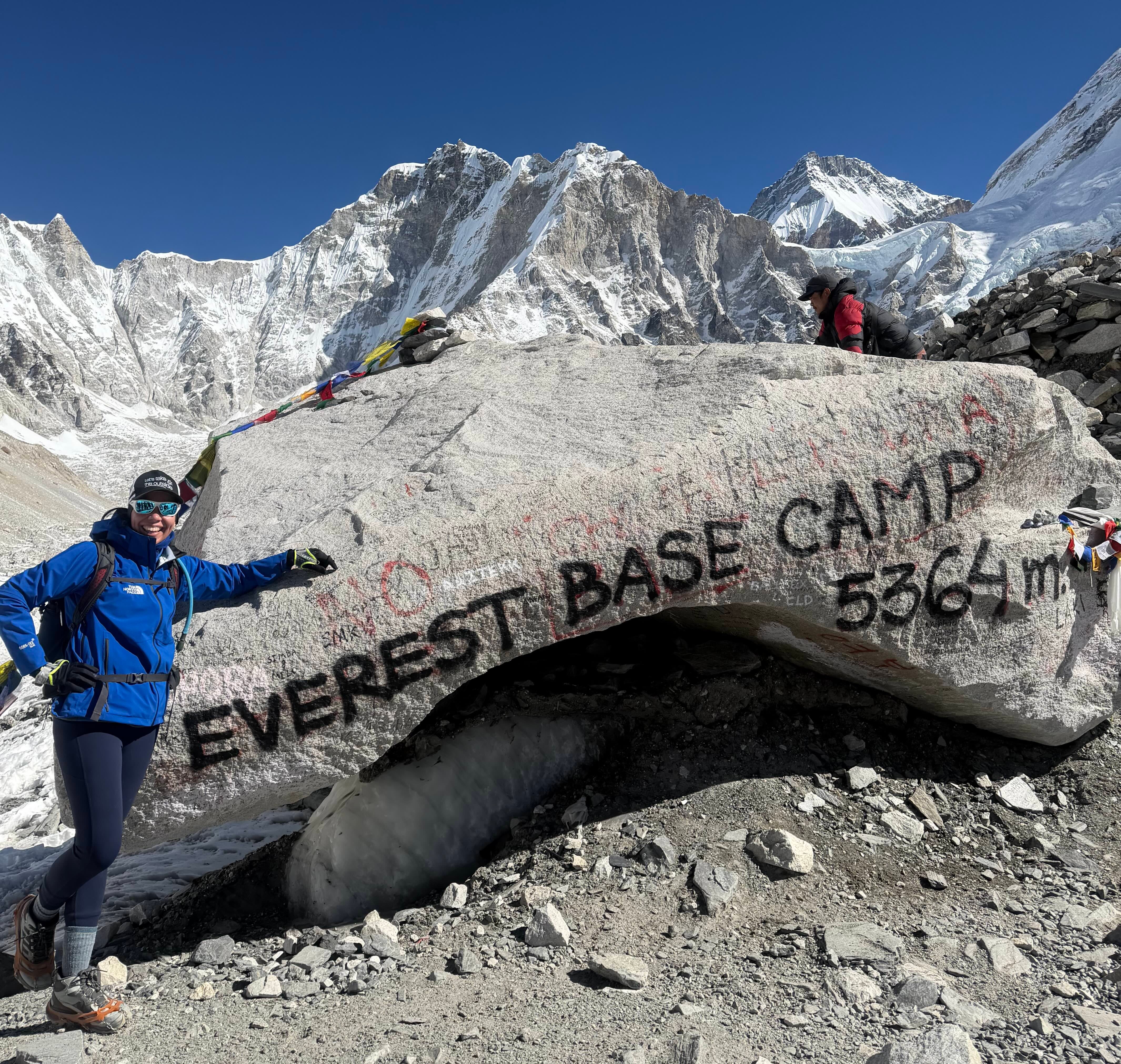
That was one of the thoughts in my head as I sat on a rock at 4,000 metres, crying so hard I could barely see the trail.
My brain was firing a relentless stream of self-doubt.
“You’re not a hiker.”
“You don’t belong here.”
“Just sprain your ankle (a little) so you can tap out.”
None of that felt unreasonable in the moment.
I’m the person who takes escalators, not stairs. I’m built for sunsets and rooftop bars, not boulders and crampons.
So how does someone like me end up on a freezing mountain in Nepal voluntarily signing up for suffering?
It started with one email.
(Btw, if my Himalayan photos aren’t showing in your email, just hit ‘View in browser’ at the top).
The left-field invitation that changed everything
In April, my friend Matt Stewart from The Custodian Way sent me an email.
Hughesy!
I have a left-field idea.
My personal view is that if you want bold and brave clients you need to be brave and bold in your choices and have interesting stories that support this. (Not saying you don’t but just making the general point ) ie crazy people like other crazy people and bold and brave people like bold and brave people.
Departing Kathmandu on the 6th of November for 18 days this year I am taking an invitation-only group to Everest Base Camp. Firstly, it should excite you and scare you. My view is that it is the best place to dance as that is where the real insights and growth comes from.
The trip itself will give you an amazing life experience that you will remember forever. The connections you will make will be once in a lifetime.
What would you do if you got this email?
Part of me was instantly keen.
Another part of me watched YouTube videos of the trip and wanted to vomit.
By Monday, FOMO won.
I called him, said yes… then remembered I had Achilles tendonitis and couldn’t even run. Minor detail.
So I did what most people avoid when they’re out of their depth.
I hired a coach.
Matt connected me with performance coach Kyle Mooney, who had been to Nepal in 2024. Kyle built a customised plan, updated it weekly and answered every ridiculous question I threw at him over WhatsApp voice notes.
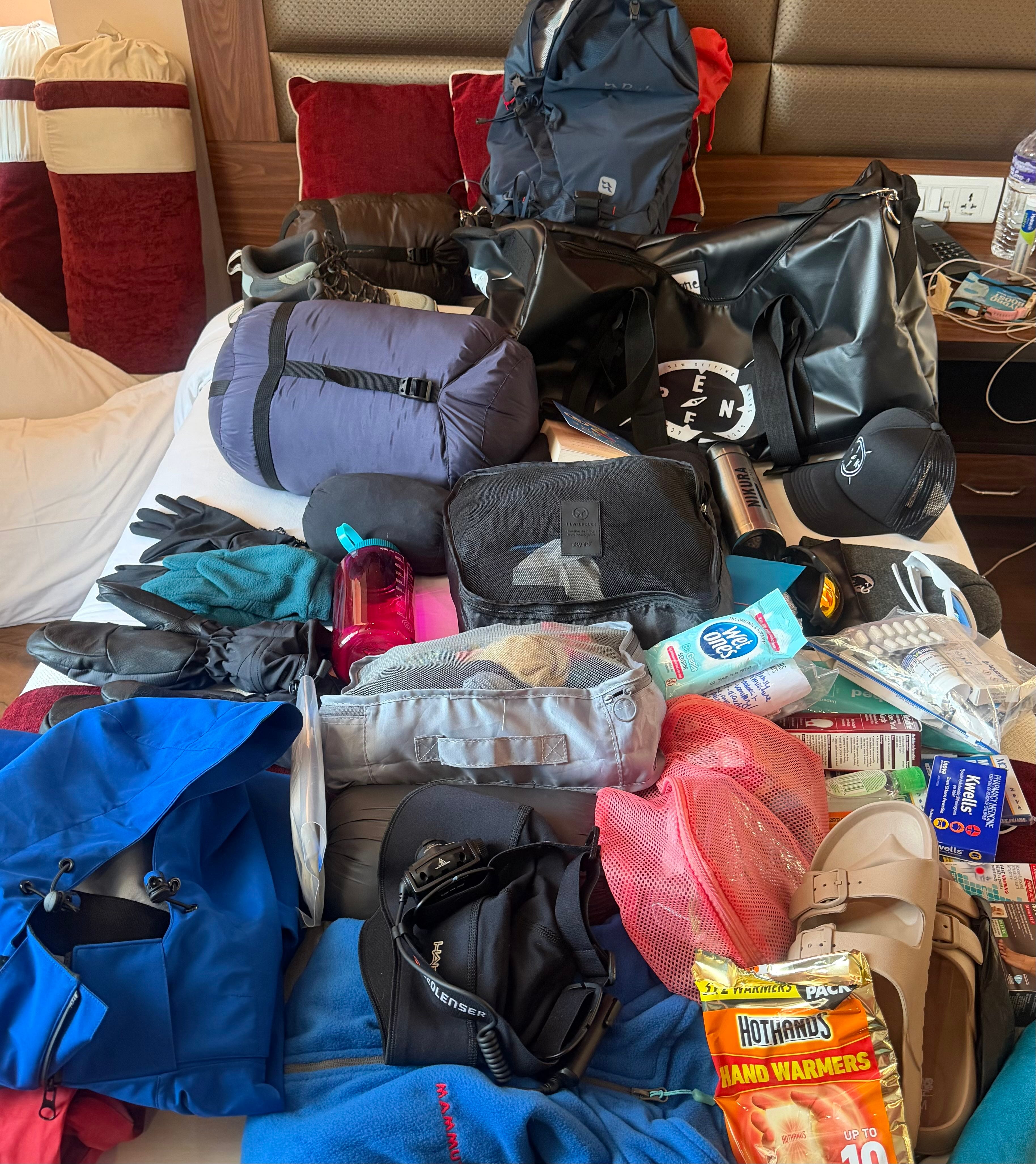
And if you’re a regular reader, you know I just love researching gear. Side note, here are the travel items I love: Topoventure Ultraventure trail shoes, Lululemon Curved Crossbody Bag 3L, anything from IoMerino, fluoro Leki hiking sticks and Liquid IV hydration.
What makes Everest Base Camp so hard?
When I told people I was going, the unsolicited commentary was wild:
“Oh that’s great! By the way, did you know that people die going to Everest Base Camp?”
“My second-cousin’s best friend is a super fit ironman and he didn’t even make it past the second day.”
Thank youuuuuu.
Most of the advice came from people who had never been high-altitude trekking, which made it very easy to ignore. My rule: never take advice from people who haven’t done the thing or aren’t the type of person I want to be.
(Listen to Matt Stewart on 🌴 219. The Advice Avalanche: Who Do You Listen To, where he shares a great point about the different ways you can make it up a mountain. The question is: which one works for you?)
EBC is tough because of three things.
The terrain
The altitude
The conditions
Altitude is the real boss battle.
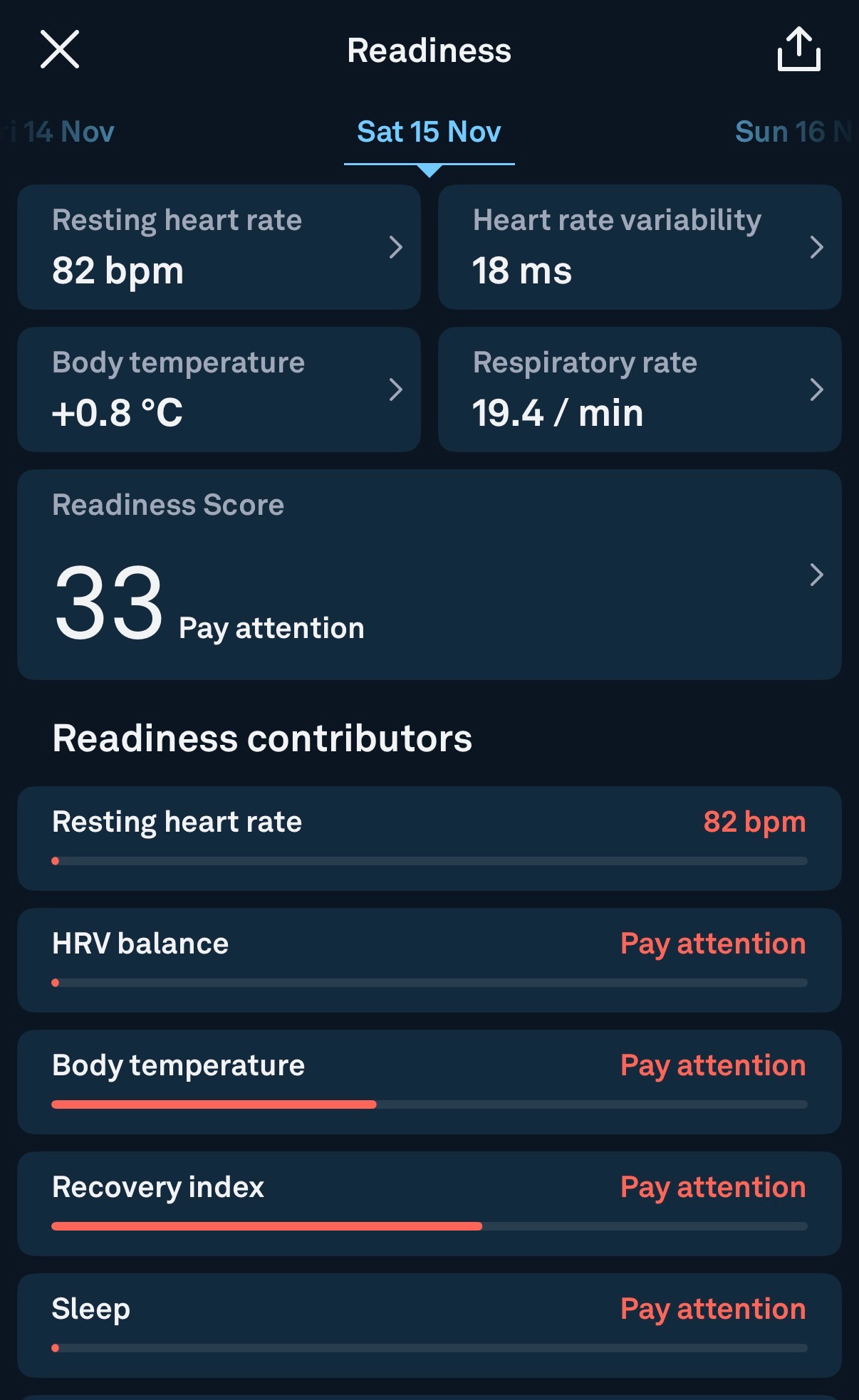
Your body can’t get the oxygen it wants. Your heart rate sits high the whole time, so you just burn energy. Sleep is sketchy.
You simply DO NOT RECOVER between days.
So imagine this: you’ve smashed your body for five straight days, your sleep has been so bad your eyes feel like they’re hanging out of your skull, and then the itinerary cheerfully tells you it’s time for an acclimatisation hike.
Not being a hiker, I thought acclimatisation hike = A rest day.
I was so wrong.
Translation: Three hours of relentless uphill on a slope so steep you’re basically climbing a staircase carved out of loose rock and ice. Just a constant upward drag at altitude when you’re already running on fumes.
The big altitude question everyone faces is whether to take Diamox (altitude sickness pill). The deal-breaker for me was simple: the side effects are almost identical to the symptoms of altitude sickness.
I didn’t want to spend the trip wondering whether I was sick or just reacting to the drug, so I chose not to take it and stuck to a different plan. Hydrate like crazy, protect my gut, skip coffee, eat clean.
The result? Just one mild headache, kept my appetite the whole way, barely slept (no one does), and surprisingly felt my strongest at over 5,000 metres.
The great news is that our whole trip was captured for a documentary for release in 2026! Btw, here’s the documentary from Experience Not Felt Possible’s 2024 Nepal trip called For The Last Time.
Now here’s where the real learning kicked in.
Six hiking lessons that aren’t actually about hiking
The terrain, the cold, the group dynamics… all tough.
But here are six ideas that stayed with me that I want to share with you.
1. The only safe step on ice is a committed one
At 5,000 metres I am staring at crampons for the first time in my life. These are metal spikes, with stiff elastic that you add to your boots so you can walk when things are slippery.
Have you ever walked with crampons?
Nope, me either.
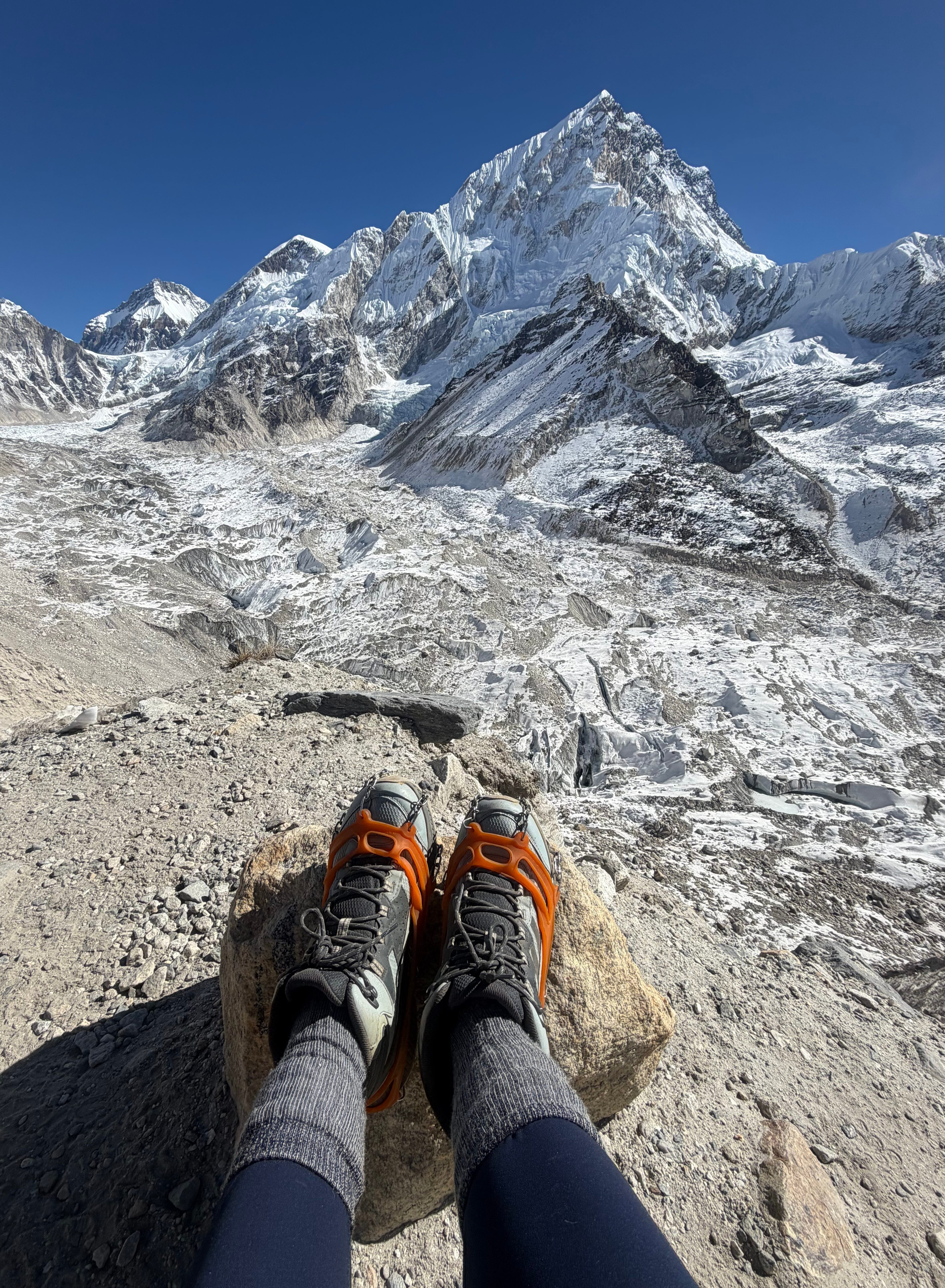
I’m so unsteady with them on, and the spikes keep catching my own feet. I look like a baby giraffe learning to walk.
Paul from our group watches this slow-motion disaster and pulls me aside.
“Widen your stance. Walk on the ice. Stamp your whole foot down.”
Three simple rules that apply to everything hard.
When life gets unstable, most people shrink. They take tiny, hesitant steps. That’s exactly when you need a wider base.
When things get difficult, most people avoid the ice. That’s exactly where you need to walk.
And when it’s time to move, half-commitments are where you fall.
The next day, I pranced my way to Base Camp using those three rules.
2. Loosen your bag straps
Every night I repack the same duffel bag.
Yet each morning it is harder to close. I am sitting on it, swearing at it, trying to get it to zip close.
“This makes no sense,” I tell myself. “Same stuff. Same bag.”
Four days in, I complain to our guide about my “defective” luggage.
He shrugs. “Oh yes, the porters tighten all the side straps each morning. Helps them secure their ropes.”
Nothing was wrong with my packing. The bag was just cinched tight.
Where else am I doing that?
Running my life with invisible tightness I never questioned?
Following processes that worked for someone else, once?
Carrying constraints that aren’t mine?
Before you decide something is impossible, check which straps you can loosen up.
3. “It’s only 2 minutes to the helipad” (and other half-truths of life)
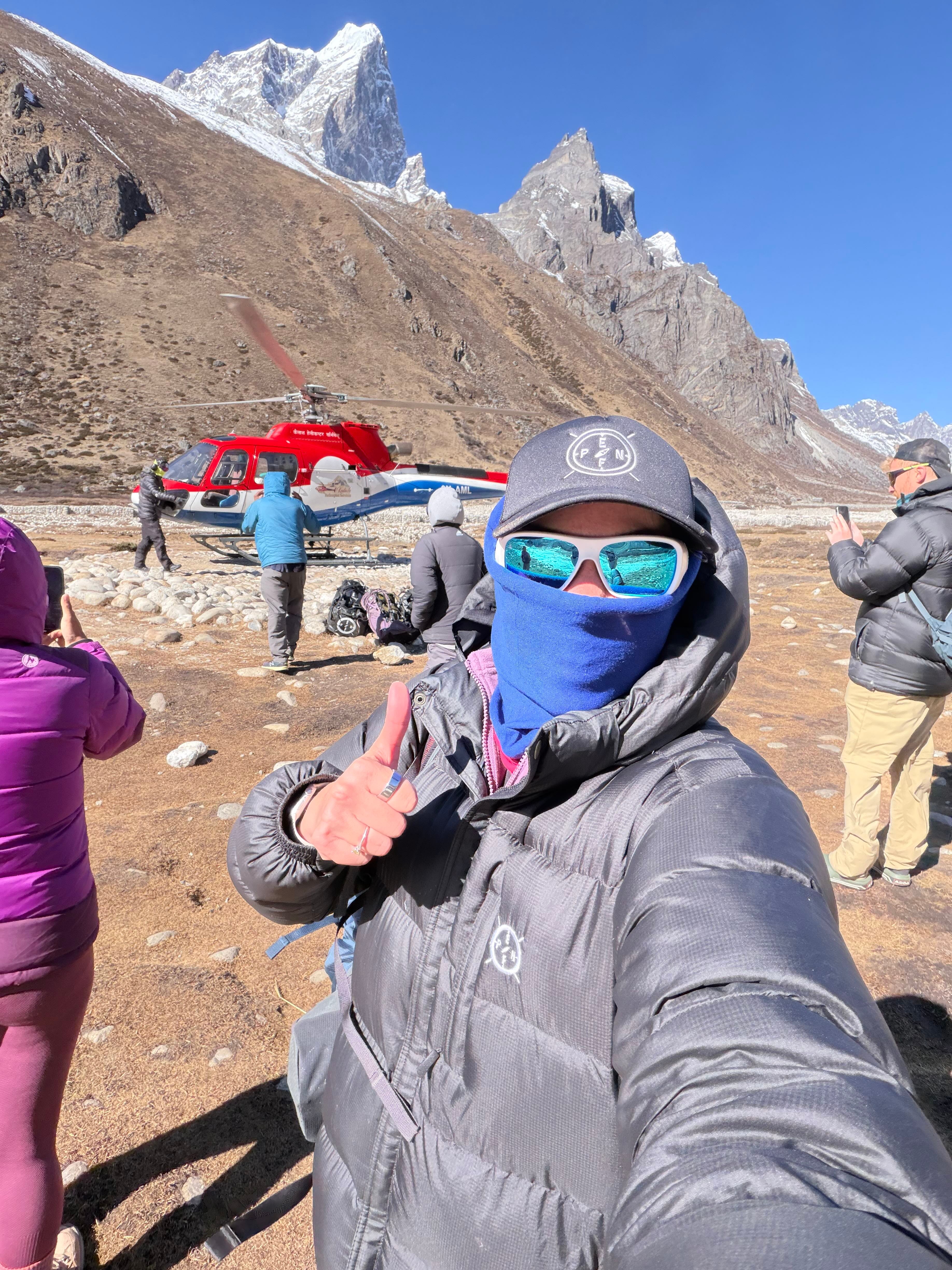
Near the end of the trek our guide smiles and says, “Simple day today. Just walk to the helipad, it is 2 minutes away.”
Easy! In my head I am already sitting with a beer in Lukla.
Ten minutes later we hit a chest-high stone wall.
“Right,” he says. “We need to throw the bags over.”
So now we are lifting 15 kilogram packs over a rock wall and listening to expensive gear thud onto rocks below. Then climbing over the wall ourselves, with foot steps over a metre apart. Luckily, I’m tall.
On the other side: an icy river running over slick rocks.
We shoulder the same bags and pick our way across, trying not to fall into freezing water.
The lesson hits fast.
Every “quick job” has a hidden wall and a cold river in it.
Every “Can you just…” has four extra steps and some risk that was never mentioned in the brief.
Expect the plot twist.
You will be far less resentful and far more accurate in how you plan your energy.
4. You cannot Amazon Prime your way out of doing hard things
About halfway through, I hit a serious wall. Legs like concrete. I am drifting off the back of the group.
I put in my AirPods, hoping music will do what it usually does when I run at home.
Instead, it makes me feel worse. I feel disconnected from my body and from the mountain. The guide behind me notices I am struggling and suggests a break.
I sit on a rock and start crying. Not because I am hurt. Just from exhaustion. Total, bone-deep overwhelm.
At home, I would have escaped. Phone, snack, coffee, Netflix, scroll, something.
Here, there is nothing.
The only way was through (and unfortunately, the only direction was up).
It made me look at how we live now. Bored? Open a screen. Restless? Add to Cart. Painful? Take a pill.
But the work that actually changes you does not come with an escape hatch.
5. Your mind hits the brakes before your body does
Most mornings I woke up thinking, “There is no way I can do this again today.”
Then I would start walking.
By mid-morning, my body was doing the thing my mind had sworn I could not do.
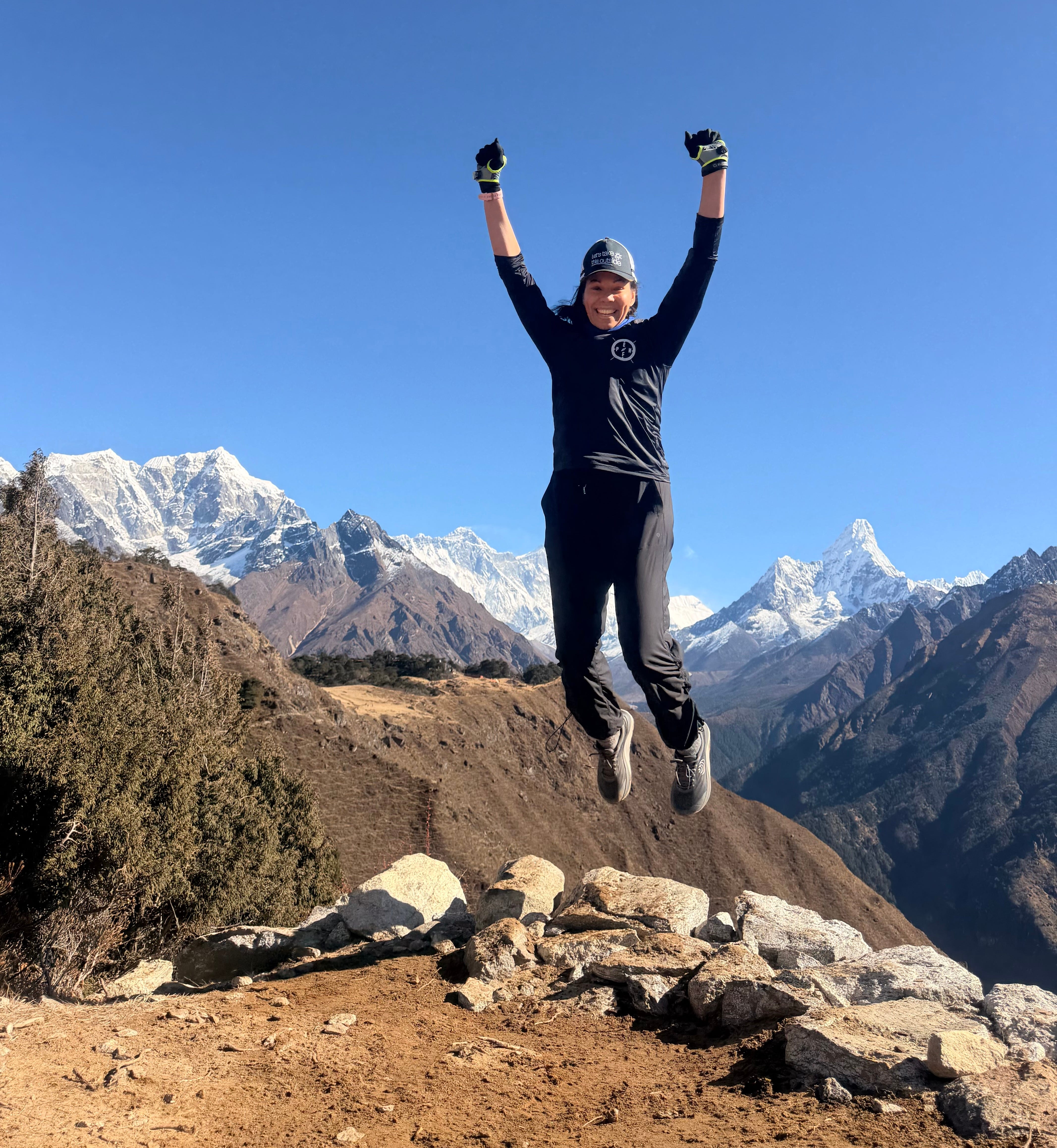
My roommate Aleisha reminded me of a David Goggins line: “When your body feels like it is at 40%, it is actually at 60%.”
I kept seeing that play out. My brain hit the panic button long before my actual capacity did.
In work terms: most people never get near their real edge. They stop when the story in their head gets too loud, not when their actual ability runs out.
If you can learn to notice that gap, you have an unfair advantage.
6. Fear shrinks with each crossing
Imagine you’re told that your charter flights are to and from “the most dangerous airport in the world”.
That’s Lukla airport! Short runway, cliffs, weird weather. Then we landed, and that fear dropped to background noise.
We owned it! (Well, the pilots did). That nerve-wracking feeling on that flight turned to pure elation. I was so excited for the return flight home.
Btw check out this video showing how these planes take off on a steep downhill runway (below).
Next enemy for me (I hate heights): suspension bridges. Maybe it’s from watching too much Indiana Jones.
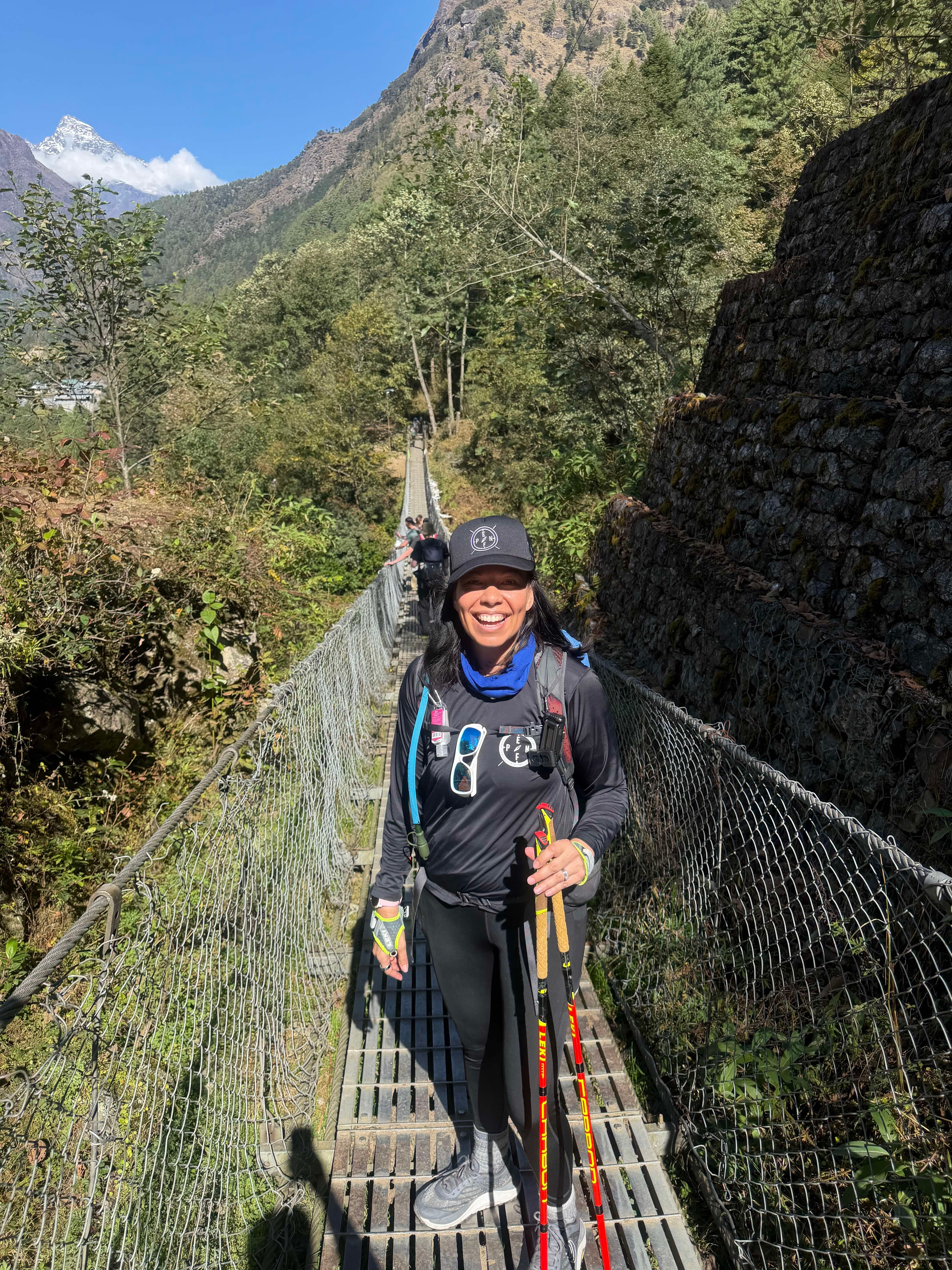
The first one almost broke me. Swaying, rattling, 200 metre drop. I moved across at the speed of a sloth, hands shaking, legs jelly, full body “nope”.
By the third bridge I was walking normally.
By the fifth I was practically bouncing across like it was a footpath.
Nothing about the bridge changed. My nervous system just got reps.
Your fears usually will not vanish in a journal or a strategy doc. They shrink when you give yourself evidence you can survive the thing you are scared of.
What this means for your mountain
You don’t need to be a certain type of person to do hard things.
Hard things are what make you the type of person who can do them.
All you need is to:
Say yes before you have all the information.
Get help from people who’ve done the thing.
Keep going when your mind is screaming for an exit.
Also:
Happy Thanksgiving to my US readers!
A huge shout-out to my trekking group - every person was a delight to be around: Positive, fit, speedy, up for a laugh, and resolutely ready to take on life’s challenges. 15 of them summited Lobuche Peak at 6119 metres. Insane. You inspire me.
…And thanks to my legendary husband Chris, who kept the home fires burning x
🌴
Leanne “Loves left-field ideas” Hughes
P.S. If you enjoyed reading any part of this, hit the heart 💙 It helps more curious humans find these stories, and it honestly makes my day.
P.S. Alan Weiss and I continue the Climbing the Mountain theme for our next Talk the Walk livestream on 10 Dec 4pm ET / 11 Dec 7am AEST. Here’s the link to RSVP.
Loved this whole piece Leanne. And the true gold was this: “My rule: never take advice from people who haven’t done the thing or aren’t the type of person I want to be.”
Great job! It must have been exhausting. I got tired just reading the article and imagining being there!